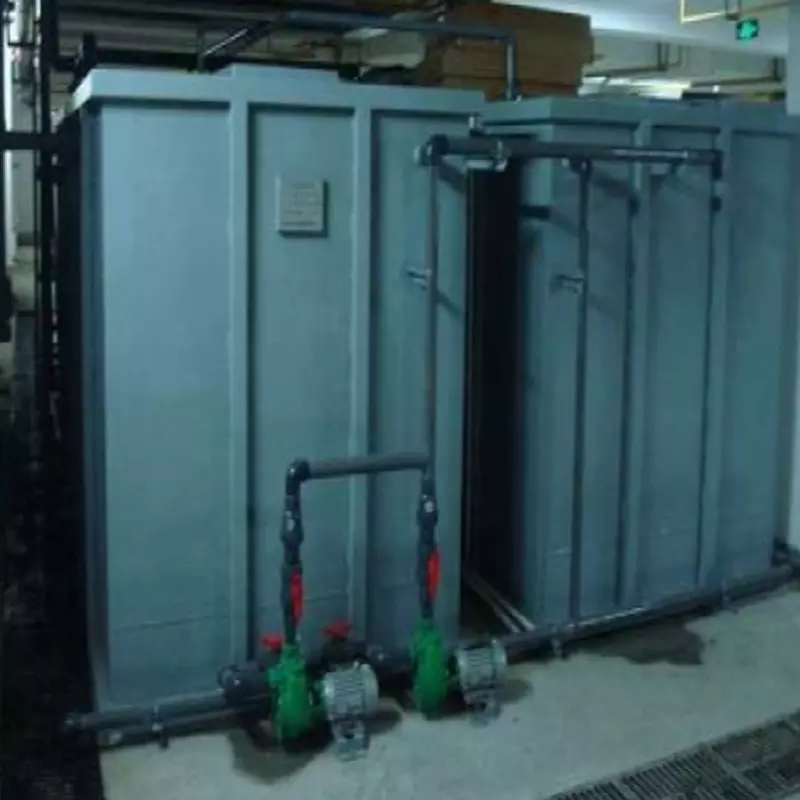
Solution for printing and dyeing wastewater treatment system
-- Efficient degradation · Deep decolorization · Stable compliance · Intelligent operation
Product Overview
Guangdong Hanluo Environmental Protection Technology Co., Ltd. has independently developed and integrated a set of efficient, stable and economical printing and dyeing wastewater treatment system in response to the characteristics of complex composition, high color intensity, high COD, large variations in water quality and quantity, and difficult biodegradation of wastewater in the printing and dyeing industry. This system adopts a combined process of "physical and chemical pretreatment + biochemical treatment core + advanced treatment guarantee", ensuring that the effluent stably meets the "Discharge Standard of Water Pollutants for Textile Dyeing and Finishing Industry" (GB 4287-2012) and more stringent local standards, and can also achieve the reuse of part of the water resources, reducing the environmental burden and operating costs for enterprises.
I. Core Processing Units and Technologies
1. Pretreatment system: Remove suspended solids and part of the color
Grating/screen: Removes large suspended particles such as fibers, thread ends, and fabric debris from wastewater, protecting subsequent pumps and equipment.
Regulating tank: Homogenizes water quality and quantity, buffers the impact of production fluctuations on the treatment system, and is equipped with built-in aeration or stirring devices to prevent sedimentation.
Coagulation sedimentation/Air flotation unit
Function: By adding dedicated decolorizing agents, coagulants (such as PAC), and flocculants (such as PAM), colloids, fine suspended solids, and some dyes in water can form flocs.
Equipment: High-efficiency vortex air flotation (CAF) or dissolved air flotation (DAF) is adopted to achieve rapid solid-liquid separation, significantly reducing color and COD, and creating favorable conditions for biochemical treatment.
2. Core biochemical treatment system: Degradation of organic pollutants
Hydrolysis acidification tank
Decompose the large-molecule and hard-to-degrade organic substances (such as certain dyes and auxiliaries) in the printing and dyeing wastewater into small-molecule and easily biodegradable substances to improve the biodegradability of the wastewater (B/C ratio).
Aerobic biological treatment unit (optional process)
A/O (Anaerobic-aerobic) process: Efficient nitrogen removal and simultaneous degradation of organic matter.
Contact oxidation method: Utilizing our company's specially designed combined filler, it features rapid biofilm formation, large biomass, strong resistance to shock loads, and high treatment efficiency.
MBR (Membrane Bioreactor) process: It combines biochemical treatment with membrane separation, resulting in clear effluent, high sludge concentration, and a small footprint. It is the preferred process for high-standard effluent or reuse.
Secondary sedimentation tank/sludge return system: It achieves sludge-water separation, and part of the activated sludge is returned to the biochemical tank to ensure the concentration of microorganisms.
3. Advanced treatment and decolorization system: Ensures stable compliance with standards
Advanced oxidation unit
Fenton oxidation or ozone catalytic oxidation: It effectively oxidizes and decomposes the refractory organic substances and color molecules remaining after biochemical treatment, which is a key guarantee for treating highly difficult printing and dyeing wastewater.
Deep decolorization filtration unit
Multi-media filter: Removes residual fine suspended solids and part of the color.
Activated carbon adsorption tower/special resin adsorption: By taking advantage of the adsorption effect, color and trace organic matter are further removed to ensure the sensory clarity of the effluent.
Disinfection unit (if reuse is required) : Ultraviolet disinfection or sodium hypochlorite disinfection is adopted to kill pathogenic bacteria in the water and meet the water quality requirements for reuse.
4. Sludge treatment system
Sludge thickening tank + plate and frame/screw press dewatering machine: It thickens and dehydrates the chemical sludge and excess biochemical sludge produced by the system to form sludge cakes with a moisture content of less than 80%, which is convenient for transportation and disposal and reduces secondary pollution.
Ii. Product Features and Advantages
Strong targeting: The process design is based on in-depth research into the characteristics of dyes (reactive, dispersing, reducing, etc.) and auxiliaries (sizing agents, surfactants), and the plan is customized to non-standard specifications.
High-efficiency decolorization: With the triple guarantee of "physical and chemical decolorization + biochemical degradation + deep oxidation", it overcomes the decolorization problem of printing and dyeing wastewater.
Anti-shock load: The reasonable design of the tank body and the flexible combination of processes can effectively cope with the characteristics of batch production and variable water quality in the printing and dyeing industry.
Operating cost optimization: Through intelligent dosing systems, efficient fan selection, sludge reduction design, and reclaimed water reuse plans (part of the treated water is reused in processes such as flushing and dyeing where water quality requirements are not high), the long-term operating costs of the enterprise are significantly reduced.
Automation and Intelligence: An optional PLC automatic control system can be equipped to achieve online monitoring and automatic control of key parameters such as pH, ORP, DO, and liquid level, reducing the intensity of manual operation and ensuring the stable operation of the system.
Flexible land occupation: It can provide various construction forms such as ground-mounted, integrated modular, and underground, adapting to the conditions of different factory areas.
Iii. Application Scope of the Equipment
Dyeing and finishing processing enterprises of various cotton, linen, chemical fiber and blended fabrics.
The comprehensive wastewater generated from each process section such as printing, dyeing, desizing, refining and rinsing.
Highly difficult wastewater such as denim washing wastewater and woolen dyeing wastewater.
Iv. Hanlo Service Commitment
One-stop service: We offer full-process services ranging from water quality testing and analysis, process design, equipment manufacturing, installation and commissioning, personnel training to operation and maintenance.
Compliance commitment: The effluent from the core process package is guaranteed to stably meet national and local discharge standards.
Quality Assurance: The main body of the equipment is made of high-quality anti-corrosion materials (such as carbon steel with epoxy anti-corrosion, stainless steel), and the core components are selected from well-known international or domestic brands to ensure the service life of the equipment.
Lifetime technical support: Establish customer profiles and provide rapid response and lifetime technical consultation services.
Adhering to the philosophy of "Establishing a career with professionalism and meeting needs with responsibility", Guangdong Hanluo is willing to join hands with you to jointly solve environmental protection problems and achieve green production and sustainable development.